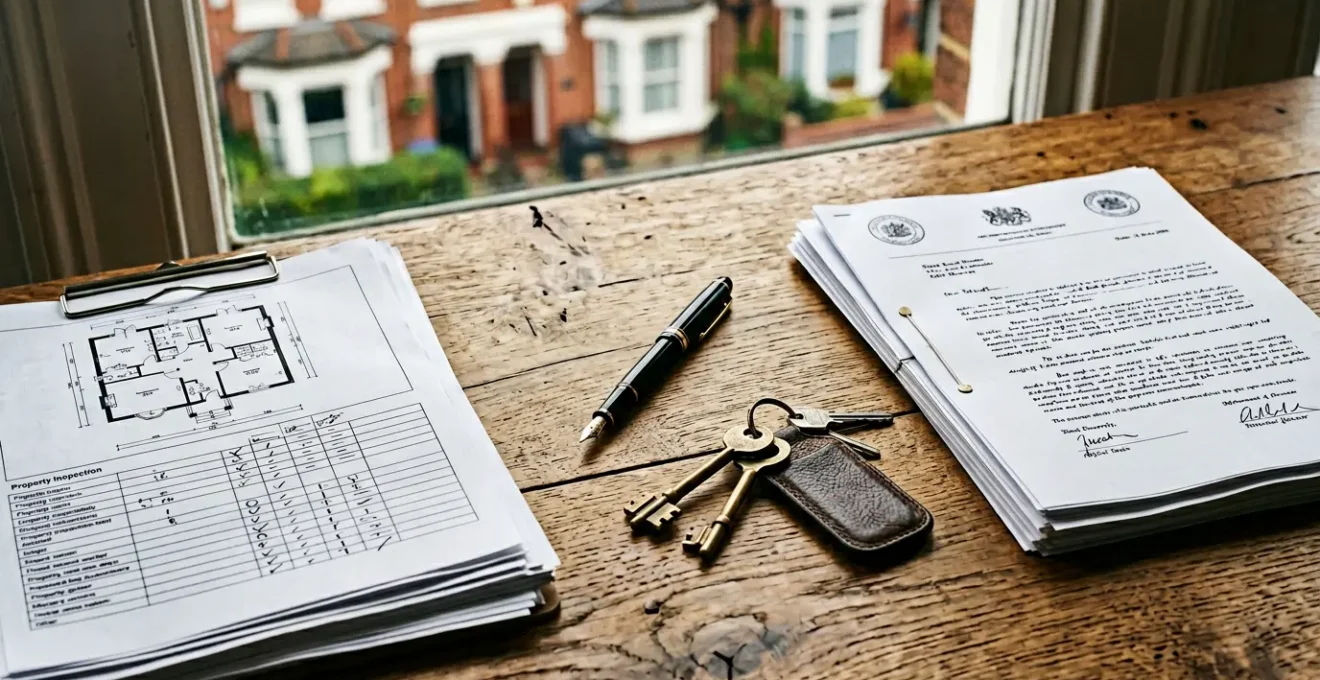
A disrepair claim is not won in court; it is neutralized years in advance by a fortress of procedural evidence.
- The tenancy inventory is not a formality but the foundation of your entire defence, creating an unarguable baseline of the property’s condition.
- Every tenant complaint, access attempt, and repair action must be logged in a time-stamped evidentiary timeline to counter accusations of neglect.
Recommendation: Immediately audit your tenancy start-up process using the inventory checklist in this guide as your first line of defence.
Receiving a letter from a “no win, no fee” solicitor alleging housing disrepair can feel like a declaration of war. For landlords, the immediate instinct may be panic, followed by a rush to carry out the requested repairs. Standard advice often revolves around vague platitudes like “keep good records” or “communicate with your tenant.” While not incorrect, this advice is dangerously insufficient in today’s litigious environment. It positions the landlord in a reactive, defensive posture from the outset.
The landscape of tenant claims has been professionalized. Solicitors are not just looking for genuine neglect; they are hunting for procedural errors and gaps in your record-keeping. But what if the key to winning wasn’t simply reacting to claims, but making your property portfolio fundamentally unassailable from the very beginning? The truth is that the most effective defence is not built in the courtroom but is meticulously constructed through a system of non-negotiable procedural compliance that begins long before a tenant even moves in.
This guide reframes the challenge. It is not about simply managing repairs; it is about building a procedural fortress. Each section will provide a blueprint for a different wall of this fortress, transforming legal obligations from burdens into weapons of claim neutralization. We will move beyond basic best practice to detail the specific, evidence-based actions required to dismantle a disrepair claim before it can gain a foothold, ensuring that when a solicitor examines your case file, they see an impenetrable wall of compliance and move on.
This article provides a comprehensive, procedural roadmap for building your defence. The following summary outlines the key strategic areas every landlord must master to protect their assets.
Summary: A Landlord’s Defensive Strategy Against Disrepair Claims
- The Inventory Report: Your Best Defence Against False Deposit Claims?
- Damp and Mould: When Does Condensation Become a Landlord’s Legal Liability?
- The 30-Day Rule: What Happens if You Protect the Deposit One Day Late?
- Section 21 Bans: Can You Evict a Tenant Who Complains About Repairs?
- Right to Enter: When Does a Landlord Visit Become Harassment?
- Accidental Damage by Tenants: Who Pays for the Wrecked Carpet?
- Signing a PG: What Happens to Your House if Your Business Fails?
- Does Your Home Insurance Cover You If a Delivery Driver Slips on Your Driveway?
The Inventory Report: Your Best Defence Against False Deposit Claims?
The check-in inventory is not a mere administrative task; it is the foundation stone of your entire procedural fortress. In any dispute over damage or cleanliness, the burden of proof lies with the landlord. Without a robust, agreed-upon record of the property’s initial condition, any deduction from the deposit becomes a matter of your word against the tenant’s, a battle you are likely to lose in arbitration. A meticulously detailed inventory, complete with photographic and even video evidence, creates an unarguable factual baseline that cannot be disputed later.
This document is your primary weapon against false claims. It must be more than a simple list of items. It should be a comprehensive condition report, noting everything from the state of the paintwork to the cleanliness of the oven. This initial investment of time is the single most cost-effective defensive action a landlord can take. It neutralizes the potential for disputes at the end of the tenancy by establishing an objective truth from day one, forming a critical part of your evidentiary timeline.
A video walkthrough, narrated to point out specific conditions and time-stamped, can be an invaluable supplement to a written report. As you can see, the process is about creating multiple layers of evidence. The following checklist outlines the non-negotiable steps to creating an inventory report that is legally watertight and serves as a powerful deterrent to unfounded claims.
Your Action Plan: Best Practice Inventory Checklist for Landlord Defence
- Complete the inventory before the tenant moves in, on or just before the tenancy start date, with time-stamped photographs of every room and item.
- Include written descriptions of existing damages alongside dated photographic evidence, noting condition using consistent terminology (e.g., ‘good’, ‘fair’, ‘worn’).
- Walk through the property with the tenant during check-in to ensure mutual agreement on the inventory contents and condition.
- Obtain the tenant’s signature on the inventory or send via email to create a digital time-stamped record of their receipt and agreement.
- Conduct periodic mid-term inspections using the same format and terminology, documenting any changes to create a timeline of the property’s condition throughout the tenancy.
Damp and Mould: When Does Condensation Become a Landlord’s Legal Liability?
Damp and mould are the primary ammunition for “no win, no fee” disrepair claims. While landlords often attribute these issues to tenant lifestyle (e.g., drying clothes indoors, poor ventilation), the law places a firm responsibility on the landlord to ensure the property is structurally sound. The key legal test is determining the root cause. Is it condensation caused by the tenant’s actions, or is it penetrating damp from a faulty roof, rising damp from a failed DPC, or condensation exacerbated by inadequate insulation or heating? The latter two firmly fall under the landlord’s liability.
This is a significant battleground, as an estimated 23% of UK homes are affected by damp and mould issues, creating a vast pool of potential claimants. A landlord’s defence cannot be built on assumptions about tenant behaviour. It requires a proactive, evidence-based approach: commissioning a professional damp survey to identify the cause, documenting all communication with the tenant regarding ventilation advice, and maintaining a clear record of all remedial actions taken. Blaming the tenant without evidence is a losing strategy; proving you have fulfilled your obligations is the only defence.
Awaab’s Law: Social Housing Damp Response Timeframes
Following the tragic death of two-year-old Awaab Ishak from prolonged mould exposure in December 2020, the UK government introduced Awaab’s Law. This legislation mandates that social landlords must investigate damp and mould reports within 14 days, start repairs within 7 days of completing the investigation, and complete remedial work within a reasonable period. While currently applicable to social housing, these standards are increasingly influencing expectations in the private rented sector and provide a benchmark for what courts may consider ‘reasonable response times’ when assessing landlord liability in disrepair claims.
The precedent set by Awaab’s Law signifies a critical shift. Courts are less tolerant of delays. Your procedural defence must demonstrate not just an intent to repair, but a swift, documented response that meets or exceeds these emerging standards of care. A slow or poorly documented response is now a significant legal and financial liability.
The 30-Day Rule: What Happens if You Protect the Deposit One Day Late?
Of all the procedural tripwires a landlord can fall foul of, the tenancy deposit protection rules are the most unforgiving. The Housing Act 2004 is brutally clear: a landlord MUST protect the tenant’s deposit in a government-approved scheme and provide the tenant with the Prescribed Information within 30 days of receiving the money. There is no grace period. Being one day late is the same as not doing it at all, and the consequences are severe and automatic.
Failure to comply gives the tenant the right to take you to court to claim a penalty. The court has no choice but to award the tenant a sum; its only discretion is how much. The penalties range from 1x to 3x the deposit amount, payable to the tenant, in addition to the mandatory return of the original deposit. Furthermore, a landlord who has failed to comply with these rules cannot issue a valid Section 21 notice to regain possession of their property until the situation is rectified, effectively trapping them in the tenancy. This is not a matter for debate or excuse; it is a rule of absolute liability.
The financial impact of a simple administrative error can be devastating, as demonstrated by the following scenarios. This is a clear example of where weaponized compliance—treating this deadline as a non-negotiable part of your process—is the only defence.
| Deposit Amount | Minimum Penalty (1x) | Maximum Penalty (3x) | Total Landlord Liability (Max) |
|---|---|---|---|
| £800 | £800 | £2,400 | £3,200 (penalty + deposit return) |
| £1,200 | £1,200 | £3,600 | £4,800 (penalty + deposit return) |
| £1,500 | £1,500 | £4,500 | £6,000 (penalty + deposit return) |
| £2,000 | £2,000 | £6,000 | £8,000 (penalty + deposit return) |
Section 21 Bans: Can You Evict a Tenant Who Complains About Repairs?
The fear of “retaliatory eviction” is a powerful tool used by tenants and their legal representatives. The law is designed to protect tenants who make a legitimate complaint about the condition of their property. If a tenant complains in writing about repairs and the local authority’s Environmental Health department issues an improvement notice, the landlord is automatically banned from serving a Section 21 “no-fault” eviction notice for six months. This can leave landlords feeling powerless, trapped with a problematic tenant while facing a disrepair claim.
However, the law also provides a mechanism for landlords to defeat this tactic: providing an “adequate response” within 14 days of the tenant’s complaint. This is a critical defensive maneuver. An adequate response is a written reply that sets out the landlord’s intended course of action, including a reasonable timescale for the works. Crucially, if you provide this response, the tenant cannot trigger the Section 21 ban simply by calling Environmental Health. You have already demonstrated your intention to act, neutralizing their legal gambit. This principle is supported by established legal understanding.
Once the landlord has knowledge of the actionable defects, no disrepair claim arises until the landlord has had a reasonable period of time in which to carry out the repairs.
– The Barrister Group, Housing Disrepair: An Overview – Legal Guidance for Landlords and Tenants
Your response is not just a letter; it is a strategic legal document. The following steps outline how to craft an “adequate response” that protects your right to manage your property:
- Respond to the tenant’s repair complaint within 14 days in writing (email or letter with proof of delivery).
- Include a clear acknowledgment of the specific repairs requested, avoiding any language that blames the tenant for the issue.
- Provide a detailed schedule of works with specific dates for inspection, diagnosis, and completion of repairs.
- If access is required, offer at least three alternative dates and times within a reasonable timeframe.
- Keep a copy of this correspondence as evidence that you have provided an ‘adequate response’, which legally removes the 6-month Section 21 ban.
Right to Enter: When Does a Landlord Visit Become Harassment?
A common tactic in disrepair claims is for a tenant to allege the landlord failed to carry out repairs, while simultaneously obstructing any attempt by the landlord to gain access to do so. This creates a frustrating “catch-22” situation. The landlord’s right to enter their property is strictly limited by the tenant’s right to “quiet enjoyment.” Except in a genuine emergency, a landlord cannot enter without permission. Unannounced visits or repeated requests at unreasonable hours can quickly escalate into a claim for harassment, a criminal offence.
The defence is, once again, procedural. The law requires a landlord to give at least 24 hours’ written notice for any visit, which must be for a reasonable purpose (like an inspection or repair) and at a reasonable time of day. This notice is not a demand; it is a request. If the tenant refuses, you cannot force entry. However, this is where you build your defence. By meticulously documenting every access request and every refusal, you create an “Access Denial Defence Log.”
This log becomes irrefutable evidence in court that you made every reasonable attempt to fulfil your repair obligations, and that the failure to do so was due to the tenant’s obstruction, not your neglect. This completely neutralizes their claim that you failed to act.
Building an Access Denial Defence Log: Evidence-Based Strategy
To defend against claims that a landlord ‘failed to repair’, comprehensive documentation of access attempts is critical. A robust Access Denial Defence Log should include: (1) Date and time of each access request; (2) Method of communication (email, letter, text); (3) The tenant’s exact response or non-response; (4) Alternative dates offered; (5) The reason for access (e.g., ‘annual gas safety check’). Citizens Advice recommends that landlords keep copies of all communications. This evidence demonstrates the landlord’s reasonable attempts to fulfill their obligations and can completely neutralize a tenant’s claim that the landlord neglected repairs, as the failure was due to tenant obstruction, not landlord inaction.
Accidental Damage by Tenants: Who Pays for the Wrecked Carpet?
The end of a tenancy often brings disputes over what constitutes damage versus “fair wear and tear.” A tenant is responsible for breakages or damage caused by negligence (accidental or otherwise), such as a red wine stain on a carpet or a cracked window. However, a landlord cannot charge a tenant the full cost of a brand-new replacement for an item that was already several years old. This is a fundamental principle of deposit deductions: a landlord can only claim for their actual financial loss, not for “betterment.”
The concept of apportionment is key. You must account for the age of the item, its expected lifespan, and how much life it had left. For example, if a five-year-old carpet with a ten-year lifespan is ruined, you can only charge the tenant for the five years of remaining life, not the full replacement cost. This mathematical, procedural approach removes subjectivity and is far more likely to be upheld by a deposit scheme arbitrator. This is where your check-in inventory is again crucial, as it proves the item’s initial condition and age.
Without this methodical approach, your claim for damages is based on opinion and is easily challenged. The following table provides a guideline for calculating these apportioned costs, turning a potential argument into a simple calculation.
| Item | Typical Lifespan (Years) | Example Apportionment Scenario | Tenant Liability Calculation |
|---|---|---|---|
| Carpets | 5-10 years | Carpet ruined after 3 years of 5-year tenancy, replacement cost £500 | (£500 ÷ 10) × 7 remaining years = £350 tenant charge |
| Painted walls | 3-5 years | Full repaint needed after 2 years of 5-year expected life, cost £400 | (£400 ÷ 5) × 3 remaining years = £240 tenant charge |
| Kitchen appliances (oven, fridge) | 7-10 years | Oven replaced after 4 years of 10-year life, cost £300 | (£300 ÷ 10) × 6 remaining years = £180 tenant charge |
| Bathroom fixtures (shower screen, toilet seat) | 5-7 years | Shower screen cracked after 1 year of 7-year life, cost £150 | (£150 ÷ 7) × 6 remaining years = £129 tenant charge |
Ultimately, the success of any claim for damage hinges on the quality of your evidence. As deposit protection companies state, a professional inventory is the single most important factor in successful landlord claims, according to guidance from mydeposits and other UK deposit protection schemes.
Signing a PG: What Happens to Your House if Your Business Fails?
For a landlord, their property portfolio *is* a business. And like any business, it can fail. While a Personal Guarantee (PG) typically relates to business loans, the principle is dangerously relevant to landlords facing disrepair claims. An unchecked disrepair claim can lead to legal costs and compensation orders that spiral out of control, placing the landlord’s personal assets—including their own home—at risk. The “business” of being a landlord fails when the financial liabilities exceed the income, and disrepair claims are a primary catalyst for this.
The threat is not just the cost of repairs. The legal business model of “no win, no fee” firms is built on generating substantial legal fees, which are often disproportionate to the actual damages awarded. This creates a huge financial risk for landlords. The problem is growing at an alarming rate; FOI data shows that the volume of housing disrepair claims has risen by 392% between 2020 and 2024. You are operating in an increasingly hostile environment.
On average legal costs claimed are substantially higher than the value of damages awarded. Legal costs for disrepair claims do not currently fall under the fixed recoverable costs regime.
– Mandy Williams and Nichola Johnston, Kennedys Law, Trends in Disrepair and Complex Housing Claims
This expert insight reveals the trap: you are not just fighting over the cost of a new boiler, you are fighting a legal machine designed to extract maximum costs. Each procedural error you make—failing to protect a deposit, responding slowly to a repair request—is not a small mistake; it is fuel for this machine. Treating your landlord obligations with the procedural rigour outlined in this guide is the only way to starve the fire of these claims and protect your personal financial security from the failure of your rental “business.”
Key takeaways
- The Inventory is Non-Negotiable: Your defence begins and ends with a detailed, signed, and dated inventory. It is the single most powerful piece of evidence you can possess.
- Documentation is Your Weapon: Every communication, every notice, every repair invoice must be filed as part of a continuous evidentiary timeline. An unproven action is a non-existent action in court.
- Procedural Compliance is Your Fortress: “No win, no fee” solicitors don’t look for bad landlords; they look for easy procedural wins. Meticulous compliance with deadlines and notice periods makes you an unprofitable target.
Does Your Home Insurance Cover You If a Delivery Driver Slips on Your Driveway?
The question seems random, but it highlights a critical point: using the wrong tool for the job. A standard home insurance policy is utterly inadequate for the risks of a rental property, just as it would be for a commercial activity like constant deliveries. As a landlord, you are running a business, and you face a unique and escalating set of legal and financial risks that require specialist insurance. Believing your standard buildings insurance will protect you from a multi-thousand-pound disrepair claim is a catastrophic error.
The financial awards in disrepair cases are increasing dramatically. Recent official Housing Ombudsman data reveals compensation ordered reached £3.7 million by Q3 of 2023/24, a more than 300% increase on the entire previous year. This is the scale of the financial risk you must be insulated from. A proper landlord insurance policy is the final, essential wall of your procedural fortress. It’s not a ‘nice to have’; it is a fundamental component of a defensive business strategy. It must contain specific elements designed to fight the battles you will actually face.
Your policy must be a shield against the specific threats of the modern rental market. Ensure your cover includes these essential components:
- Landlord Legal Expenses Cover: This is the most critical component. It covers the solicitor’s fees and court costs required to defend you against a disrepair claim, often up to £100,000. Without this, the cost of simply defending yourself could be ruinous.
- Rent Guarantee Insurance: Covers lost rental income if the tenant stops paying during a lengthy dispute, or if the property becomes uninhabitable during major repairs.
- Public Liability Cover: Protects you if a tenant or visitor is injured due to a property defect, a common add-on to disrepair claims. A minimum of £2 million is recommended.
- Buildings Insurance with ‘Trace and Access’: Covers the expensive work of finding the source of hidden leaks, often the root cause of damp and mould complaints.
Do not assume you are covered. You must proactively check that your policy includes these specific protections. This is the final layer of your defence, ensuring that even if a claim penetrates your initial procedural walls, you have the financial backing to fight and win.
Your defence against disrepair claims starts today, not when a letter arrives. Begin by auditing your current procedures against the frameworks in this guide. Identify and immediately fortify any weaknesses in your procedural fortress. This proactive, systematic approach is the only way to protect your investment in the modern rental market.